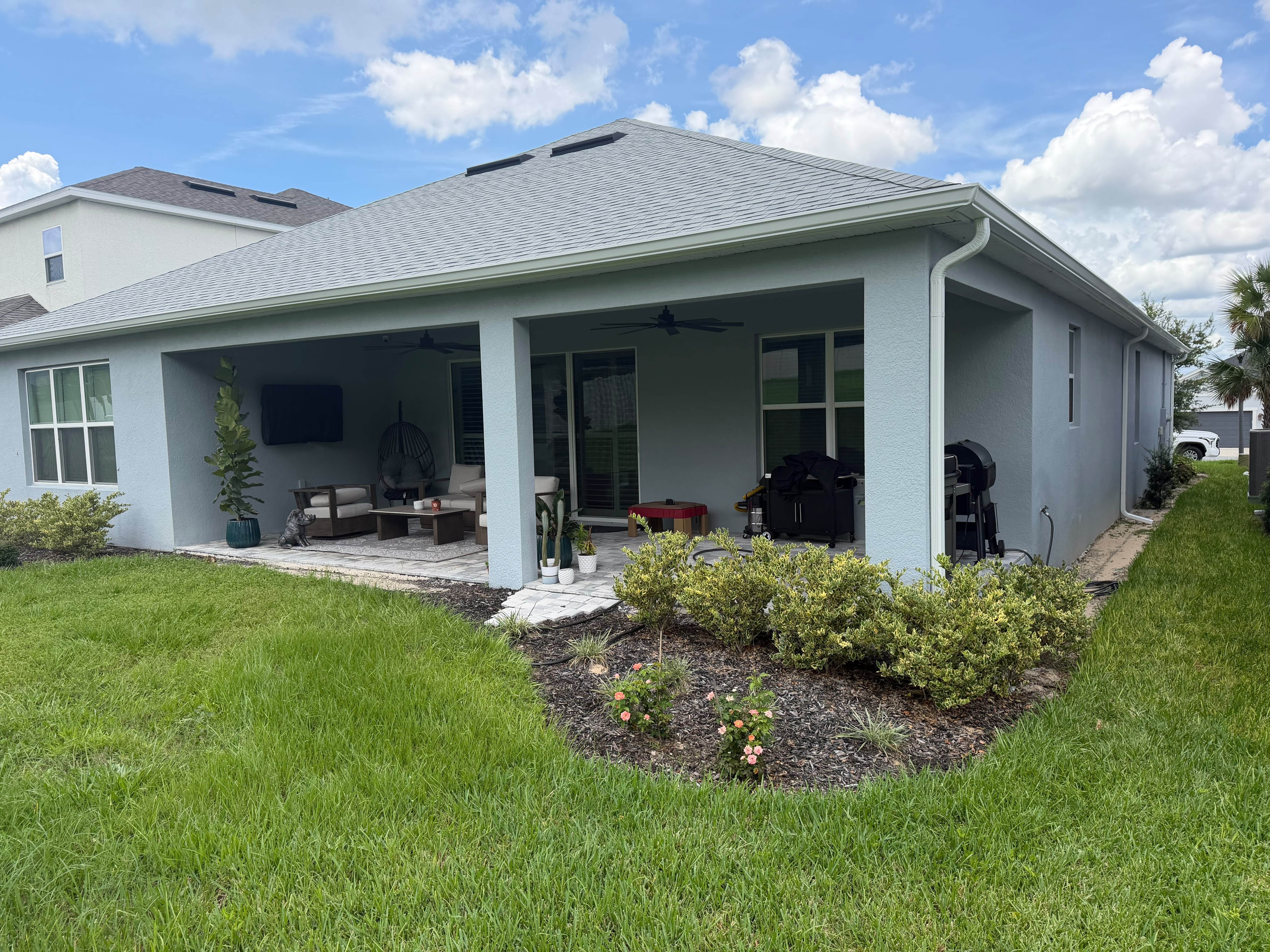
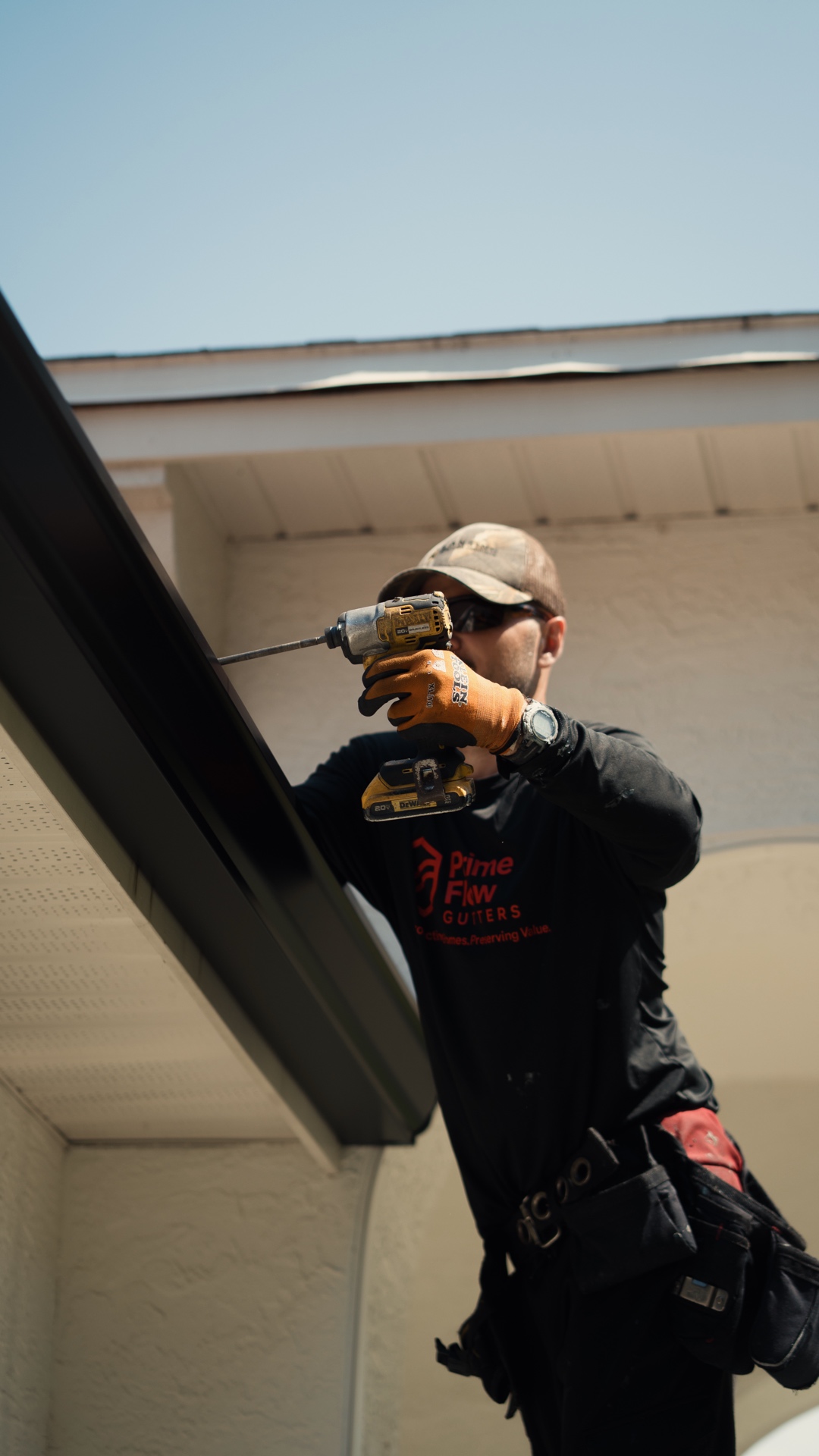
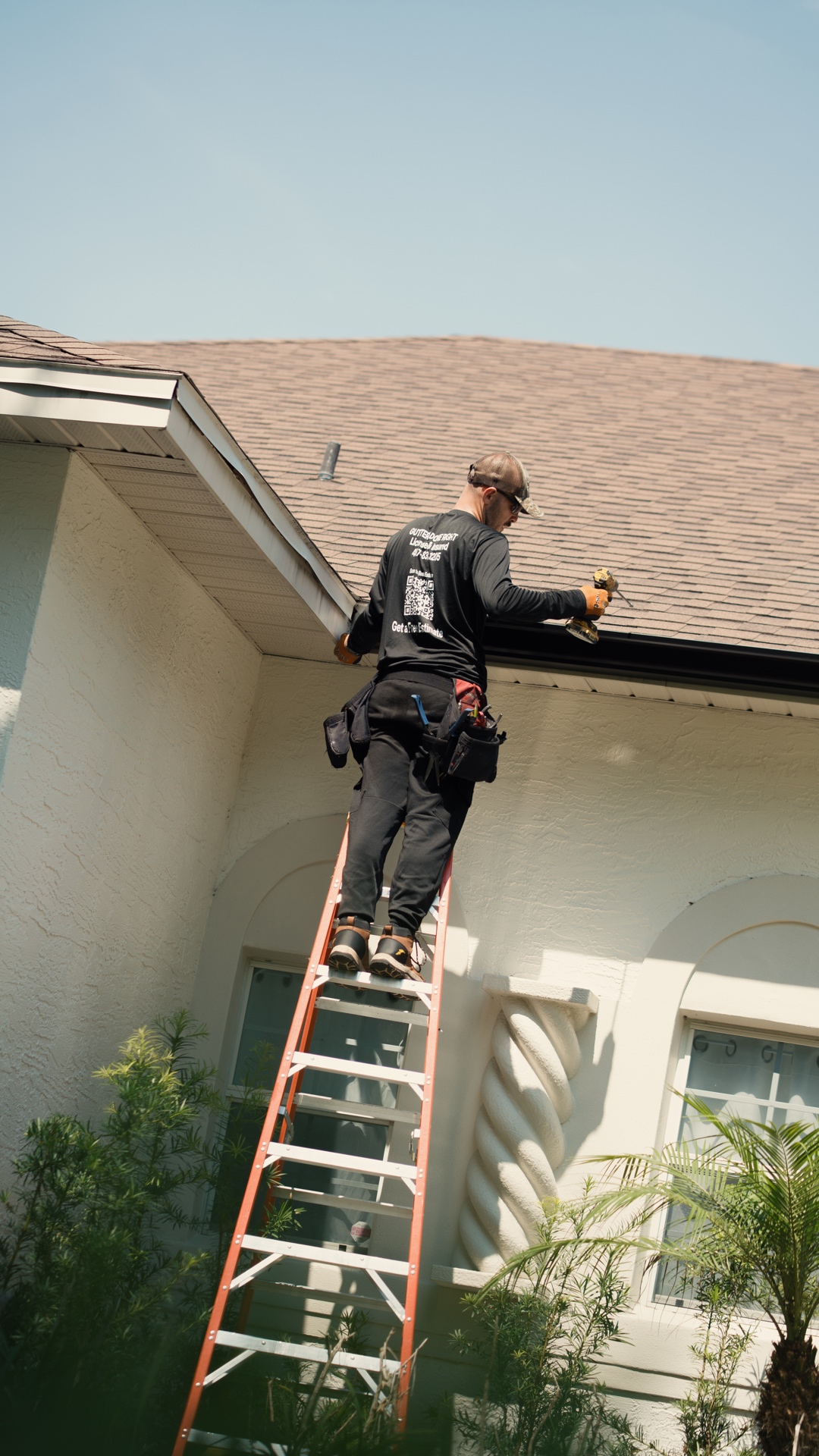
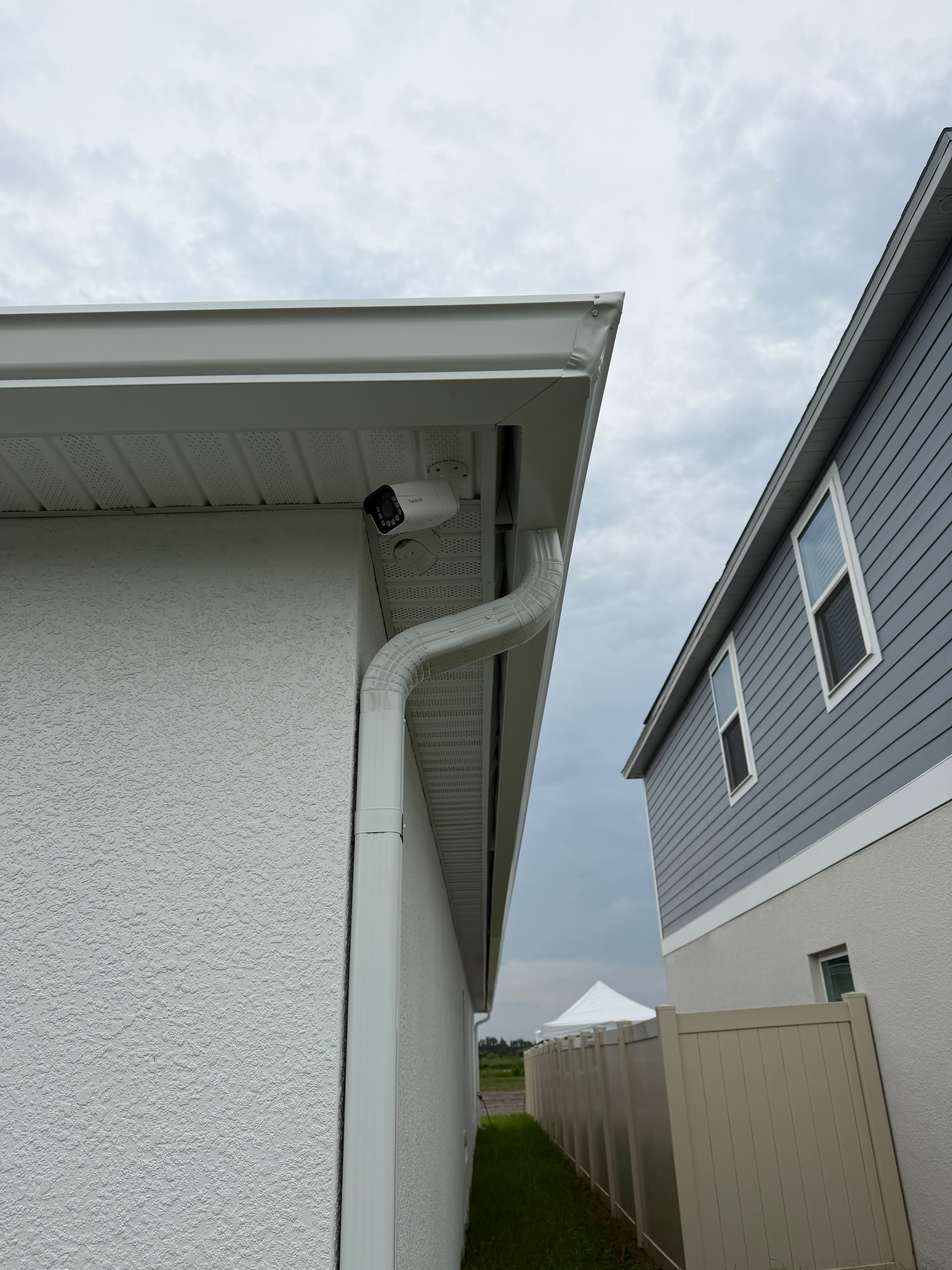
01 / DebrisFind out what reaches the roof before choosing a guard.
Broad leaves, smaller debris, roof grit, valley wash, and overhanging branches behave differently. PrimeFlow looks at the debris you can see, the roof material, the outlet openings, the gutter profile, and the access, so a guard choice is tied to this roof and not to a product claim. A compatible guard can reduce how much debris drops into the trough. It does not end inspection, and PrimeFlow will say when a guard is a poor match. The review includes where debris actually collects: the valleys, the inside corners, the outlets, and the sections directly under overhanging limbs. Those are the places a guard has to handle and the places a homeowner will still need to check. If a roof gets very little debris, PrimeFlow will say a guard may not be worth adding, and the estimate can be written with or without one so the difference is clear.
02 / Older rooflinesDocument the existing fascia and roof edge first.
Before anything is removed, we record the condition of the existing roof edge on this house, whatever its age. PrimeFlow checks visible fascia, prior fasteners, corners, pitch, and downspout routes. Concealed deterioration is not assumed from a photo; if the fascia is soft or out of line, that work is priced only after someone looks at it. On an older roof edge, removal can reveal fascia that looks different from the outside view. PrimeFlow writes that possibility into the estimate instead of hiding it in a price. The scope names what was seen, what is assumed, and how any concealed condition found during removal will be discussed before extra work goes ahead. The owner decides on any added fascia or soffit work after it is described.
03 / OverflowSeparate a clog from an undersized system.
A clogged outlet, poor pitch, too few downspouts, a damaged section, and not enough capacity can all look like the same overflow. The assessment separates those causes before deciding whether cleaning, repair, a guard, a 6-inch replacement, or a 7-inch evaluation fits. PrimeFlow’s premium residential baseline for many Florida homes is a 6-inch seamless gutter in .032 aluminum. A useful overflow check starts with when and where it happens. Water spilling at one inside corner during a heavy storm points to a different fix than water spilling along a whole run. The visit records the outlet sizes, the number of drops, the pitch you can see, and the condition of the existing sections. That record is what supports a recommendation to clean, repair, add an outlet, or replace the system.
04 / Water routeKeep roof water moving to a practical spot on the lot.
Downspout positions are reviewed around paths, planting, entrances, walls, and the visible grade. Gutters can improve roof-water control, but they do not correct every grading, groundwater, lake-level, or public stormwater condition. Those belong with the property, another trade, or the city, and the estimate will say so. Winter Park lots with mature planting and established walks often leave few clean landing spots. Each downspout is reviewed for where it ends, whether it crosses a path, and whether an extension or a different outlet position helps. Where the real issue is a low spot in the yard or water from a neighboring lot, PrimeFlow says so and keeps that work out of the gutter scope.
05 / InstallationForm the runs on site to match the measured edge.
After the scope is signed, PrimeFlow forms the long runs from .032 aluminum at the property. On a standard run, our practice is concealed hangers about every 16 inches; that is our practice, not a code section, and an older or damaged fascia can change the attachment. Pitch, outlets, sealed corners, 3×4 downspout turns, finish, cleanup, and a walkthrough follow the written scope. Before forming, the crew confirms color, profile, outlet locations, and downspout positions against the written scope. On a roof with heavy tree cover, the crew also checks safe ladder positions for future cleaning so outlets and guards stay reachable. The walkthrough at the end covers each outlet, each landing spot, and any guard that was installed so the owner knows what still needs routine checks.
06 / PricingAccess and roof-edge condition move the number.
Estimate inputs include footage, height, corners, access, removal, profile, downspouts, guard type, color, fascia condition, and soffit or fascia scope that was actually seen. There is no single price on this page. PrimeFlow’s usual warranty position is 7 years on workmanship and 25 years on manufacturer material, subject to the product terms and the signed agreement. Call (407) 902-7639 or send the Orlando form. Two Winter Park houses with similar footage can price differently because of height, tree cover around the ladder positions, an older fascia, or a guard that needs to fit a particular roof material. That is why the page does not publish a number. The written estimate lists what is included and what is not, so it can be compared line by line with another proposal.