
FOLLOW THE COMPLETE ROOF-WATER ROUTE.
Start with the roof planes feeding a gutter line. Then consider pitch, valleys, collection length, outlets, downspouts, visible wall routing, and the planned discharge direction.

Choose a confirmed service category, compare the system choices that fit your roofline, and start a no-obligation estimate. PrimeFlow confirms final scope, availability, and the appropriate market path during intake.
Free, no-obligation estimate
Begin with the system need, then use the direct service links below to compare how PrimeFlow approaches the roof edge, outlet route, visible finish, and property-specific scope.
Custom-fit collection systems for rooflines, tile edges, larger roof planes, new homes, finish coordination, and specialty material decisions.
Gutter guards, outlets, downspouts, and roof-water routing choices that are evaluated as one connected system.
Focused evaluation for existing gutter constraints, replacement planning, visible fastening surfaces, soffit, and fascia context.
Commercial and specialty collection systems for qualifying properties that need takeoff, access, capacity, routing, and closeout coordination.
Both systems are evaluated around contributing roof area, valleys, pitch, run length, outlets, downspouts, roof edge, and discharge direction. A larger profile is not automatically the right answer.
COMPARE 6-INCH + 7-INCH SYSTEMS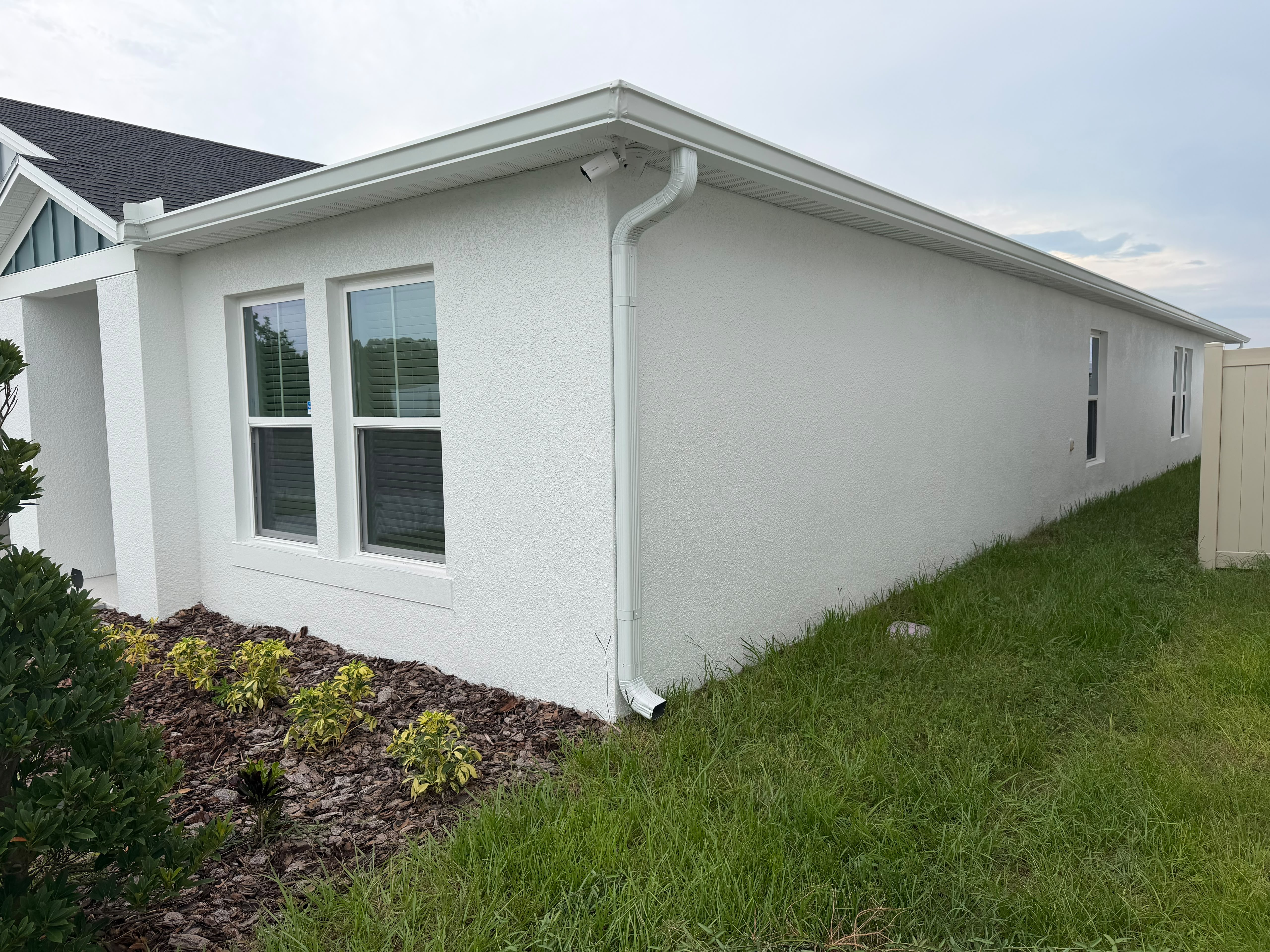 Premium residential standard
For many Florida homes, a properly planned 6-inch seamless system provides a strong combination of capacity, architectural fit, and oversized downspout compatibility.
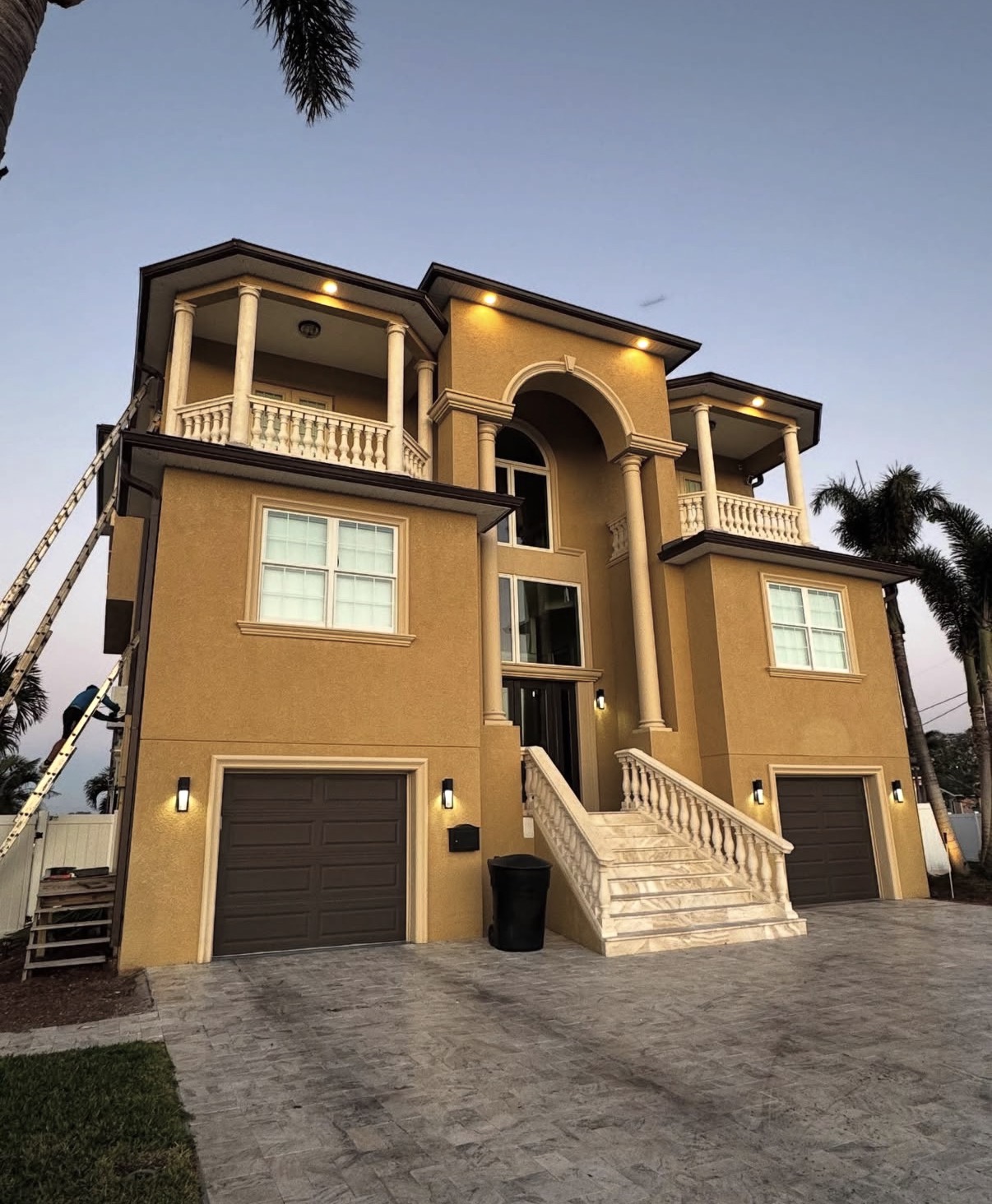 Only where the eave earns it
A roof needs a 7-inch look when valleys and long eaves concentrate rain into one corner. A quieter eave can stay smaller on the same house. Seven-inch is not an automatic upgrade, and it does not cover street drainage, a swale, or a public inlet.
Start with the roofline, the point where water is concentrating, and the space where the downspout needs to continue. The guides below help organize the conversation; PrimeFlow confirms the final scope at the property.
These answers explain the boundaries of a website catalog. They do not replace a property review or promise a universal drainage result.
Start with the roofline and the problem you are trying to solve. A service page can help you compare system types, but roof area, pitch, valleys, outlets, downspout routing, fascia condition, access, and visible site conditions still need a property-specific review.
Both are high-capacity options. The right profile depends on the roof geometry, water concentration, architecture, and practical discharge route. A larger system is evaluated where the property supports it—not automatically selected for every home.
No. Gutters manage roof runoff at the roof edge. Grading, groundwater, existing drainage infrastructure, municipal stormwater systems, and structural conditions can require separate evaluation beyond a gutter scope.
The gutter channel collects roof runoff, but outlets and downspouts must provide a compatible exit path. Roof area feeding each run, valleys, pitch, routing, and practical discharge locations are reviewed together.
Photos of the roof edge and problem area, a description of when the issue occurs, prior gutter work, known HOA requirements, and any concerns about walkways, landscaping, or drainage can make the discussion more productive.
No. The catalog explains how PrimeFlow approaches common decisions. The final recommendation depends on the individual roofline, visible conditions, access, component availability, and written project scope.
Share the basic property details below without leaving this page. PrimeFlow confirms the appropriate market, availability, and any estimate time before an appointment is set.