
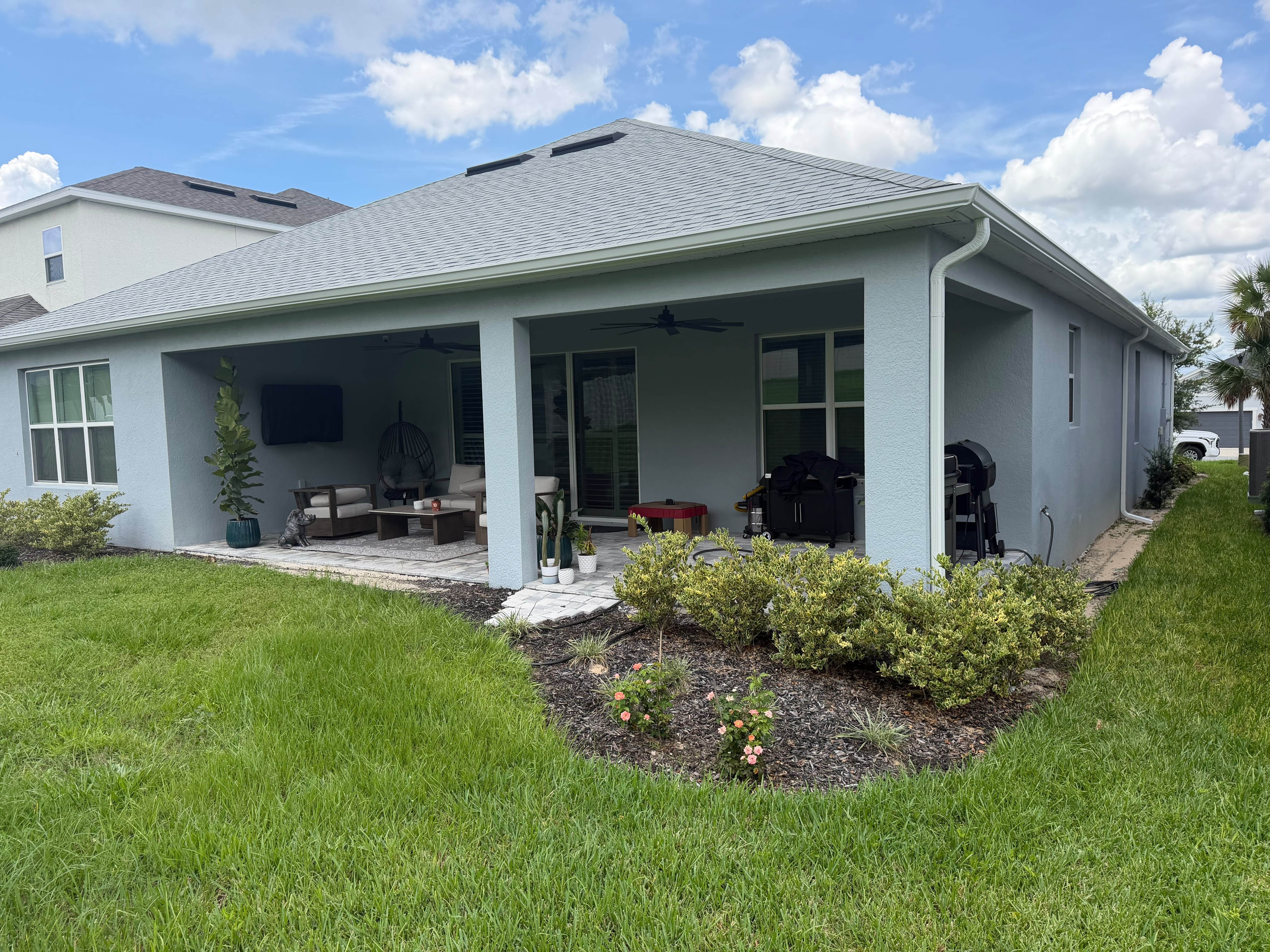
Short answer. Overflow means roof water is leaving the gutter somewhere other than the planned downspout. In a Florida storm the cause may be debris, too few outlets, a downspout that cannot keep up, slope, a valley dumping into one spot, or rain shooting past the front lip. A larger gutter is one possible response, not the first assumption.
Overflow is water missing the downspout, not every wet spot on the property.
If water is pouring over the front lip, spilling at a corner, or sheeting behind the gutter onto the fascia, that is gutter overflow. If the street is flooded, the swale is full, or the yard is wet far from the roof edge, that is a different problem. Orlando’s Streets and Stormwater Division and Sarasota County stormwater offices are the public side of street and neighborhood drainage. A gutter company can speak to the roof edge. It should not rebrand a flooded street as a seven-inch gutter sale.
Florida storms make small restrictions obvious.
NWS Melbourne’s rainy-season note describes summer afternoons when sea-breeze collisions produce heavy rain in a short time. The Tampa Bay office covers the Sarasota side of the state with its own forecasts. A gutter can look fine in a light shower and spill when a cell dumps on one roof plane. That does not mean the profile is wrong. It means the test that matters is a hard rain, and the thing to record is which edge spills.
- One corner only: look at the valley or the outlet nearest that corner.
- The whole run: look at slope, outlet count, and downspout size together.
- Water jumping past the lip: look at roof edge, pitch, and gutter height, not only volume.
- Spilling after debris season: clean and recheck before you resize.
Six causes to check before you change size.
Work from the easiest observation to the rebuild. None of these can be confirmed from a single photo, and more than one can be true.
Debris at the outlet
Leaves, seed pods, and grit collect at the hole even when the rest of the trough looks open. A guard does not end this check. Clear the outlet and the first elbow, then watch the next storm.
Too few exits
SMACNA’s method counts downspouts, not just gutter width. A long run with one outlet can overflow in the middle or at the far end while the pipe at the corner runs fine.
Slope the wrong way
Water needs a fall toward the outlet. A gutter that holds a pond is not only a size problem. Hangers, fascia, and the original pitch all belong in the look.
A downspout that cannot empty
Flat elbows, a crushed extension, or a buried pipe you cannot see will back water into a gutter that is otherwise large enough. Building America pairs the gutter with the downspout for this reason.
A valley or a steep plane
Two roof faces meeting at a valley can throw more water at one short section than the rest of the house sees. Rain can also shoot over a gutter when the roof releases it past the lip. The overflow FAQ and the “can rain shoot over gutters” FAQ cover those patterns in shorter form.
The profile is actually short of the roof
After the items above are ruled out, five-inch or a small six-inch run may be too little for that roof area. Then, and only then, is a larger profile the lead option. Seven-inch is still not automatic.
What to write down before the assessment.
A useful note is specific: the date of the storm, which side of the house, whether it was the front lip or the end cap, and whether the downspout was flowing while the gutter spilled. Photos taken from the ground help. They do not show hanger screws hidden behind the trough or the inside of a buried extension. PrimeFlow uses that note as a starting point, then looks at the roof edge in person.
- Which elevation spilled, and whether a valley sits above it.
- Whether the downspout outlet was running, dripping, or dry.
- Any recent roof work, new screen enclosure, or added gutter guard.
- Where the water went after it left the gutter: wall, walk, or yard.
Next step is a free look at that edge, not a booked rebuild.
Request a free estimate in Orlando or Sarasota and say which edge overflows. The visit can end in cleaning direction, a repair, an added outlet, or a replacement. None of those is scheduled as booked work until the written scope and the required deposit are set, unless a written waiver says otherwise. Overflow repair is not a promise to dry out a flood-prone lot.