A 7-inch profile increases capacity; it does not replace attachment planning.
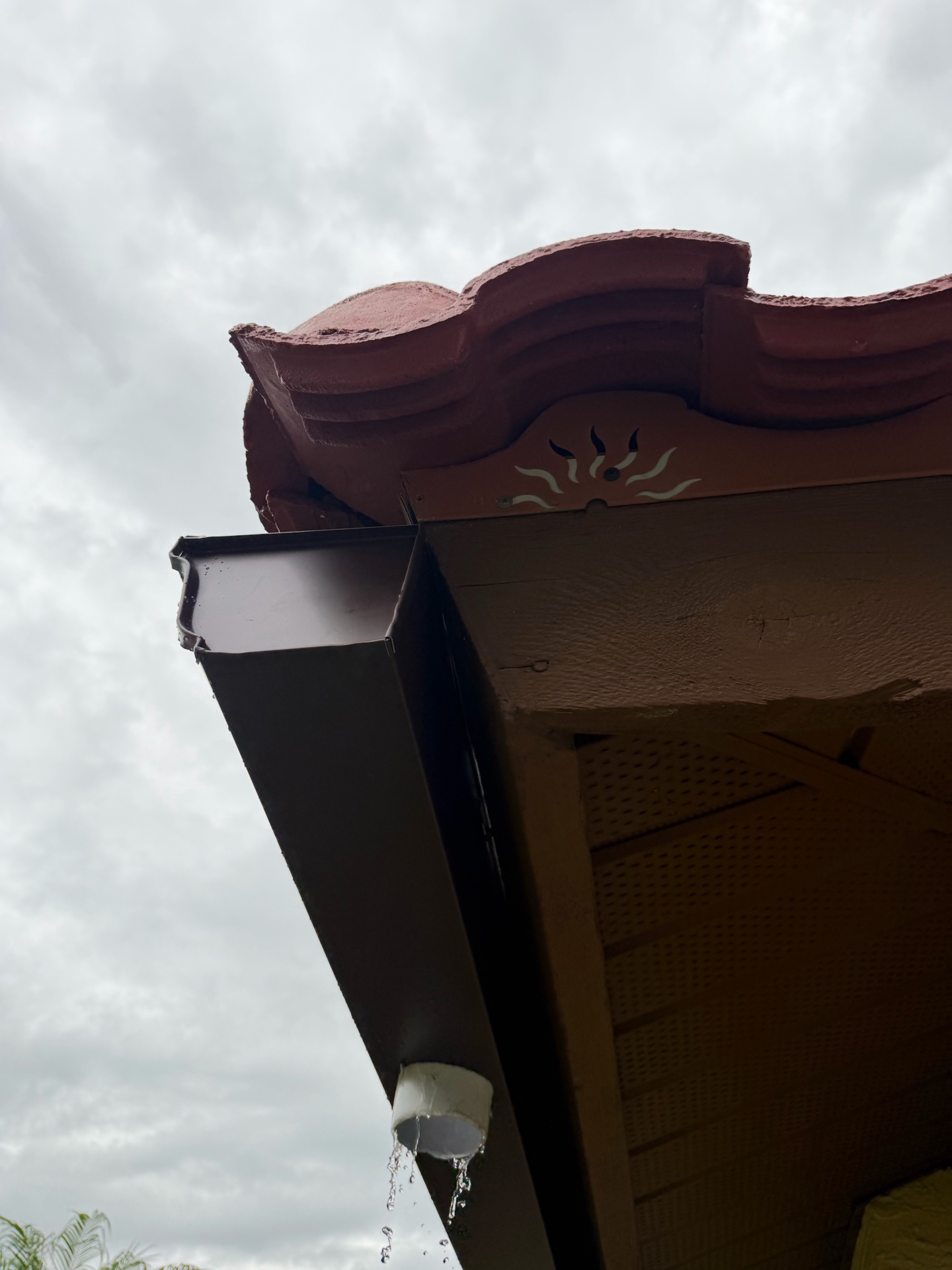
Seven-inch gutters can be appropriate for tile roofs, larger roof planes, valleys, steeper pitches, or concentrated runoff. Their larger collection profile should still be paired with a planned outlet and downspout route, an attachment approach that suits the roof edge, and a written scope that identifies visible fascia conditions. A larger gutter is not automatically the right answer, and it is not a substitute for a sound mounting surface.
Separate drainage fall from the fascia mounting plane.
A gutter needs a controlled fall toward its outlet so collected roof runoff has a clear route. At the same time, the back of the gutter and hanger assembly need a supported relationship to the fascia or approved mounting surface. Those are related but distinct installation decisions. The goal is not a perfectly level trough or a fastener that merely reaches the edge; it is a measured drainage path with the intended attachment engagement confirmed for that roofline.
T8 wedges can be considered when the fascia plane calls for a correction.
PrimeFlow uses the term T8 wedge for a field spacer or adapter considered when an angled, sloped, or otherwise unsuitable fascia plane needs a corrected mounting relationship. A wedge is not a universal component and should not be added by rule alone. The fascia profile, visible condition, gutter profile, hanger design, intended fastener path, roof edge, and final drainage fall determine whether a wedge or another approved approach belongs in the scope.
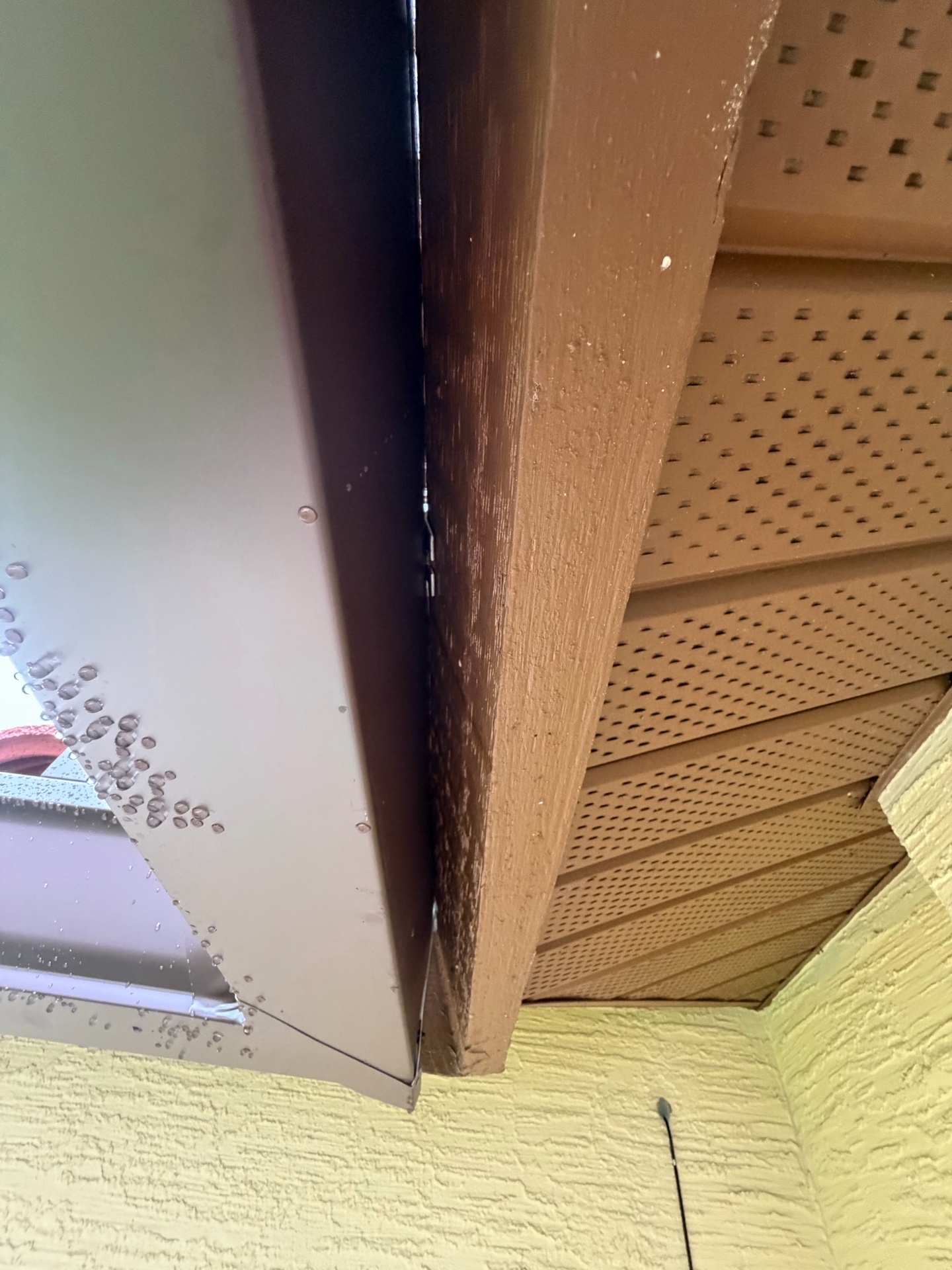
A visible gap can be a risk signal, not a remote diagnosis.
The supplied field example visibly shows a gap at the gutter-to-fascia area. When a gutter is not seated or supported as intended, water load, debris, wind exposure, and normal movement may place more stress on the hanger and fastening assembly. That can contribute to outward movement, distortion, or a changed roofline appearance. A photo alone cannot prove why a condition developed, how deeply a fastener engages, whether a wedge was omitted, or what repair is appropriate; those questions require an in-person review.
Straightness protects the finished roofline, but no installation promises a fixed lifespan.
A well-planned gutter run should follow the intended roofline plane while maintaining the designed fall to the outlet. Correct hanger placement, fastener engagement, fascia evaluation, outlet planning, downspouts, and cleanup all support a reliable finished system. They do not guarantee that every gutter will last more than 20 years. Material warranty terms, workmanship coverage, weather exposure, maintenance, roof changes, fascia condition, and the customer’s written agreement all remain relevant to the actual project.