
A visible symptom does not prove one cause.
Sagging, standing water, loose-looking sections, recurring overflow, water moving behind the gutter, displaced outlets, or a downspout pulling away from the wall can justify review. These observations do not automatically prove improper installation. Debris, storm impact, material condition, roof geometry, concentrated flow, fascia changes, later alterations, and inadequate maintenance can produce similar symptoms. Record the location and pattern instead of diagnosing the cause from the ground.
Pitch and outlet placement affect the path to the downspout.
A gutter run needs a deliberate route toward its outlets. Water remaining in a section after rainfall may indicate a pitch, restriction, or movement concern, but a safe on-site assessment is needed. Outlet quantity and location also matter: a long run or concentrated valley may need a different plan than a short, simple roof edge. PrimeFlow Gutters reviews the complete route before recommending adjustment, re-sealing, partial replacement, or a new system.
Attachment and roof-edge conditions belong in the scope.
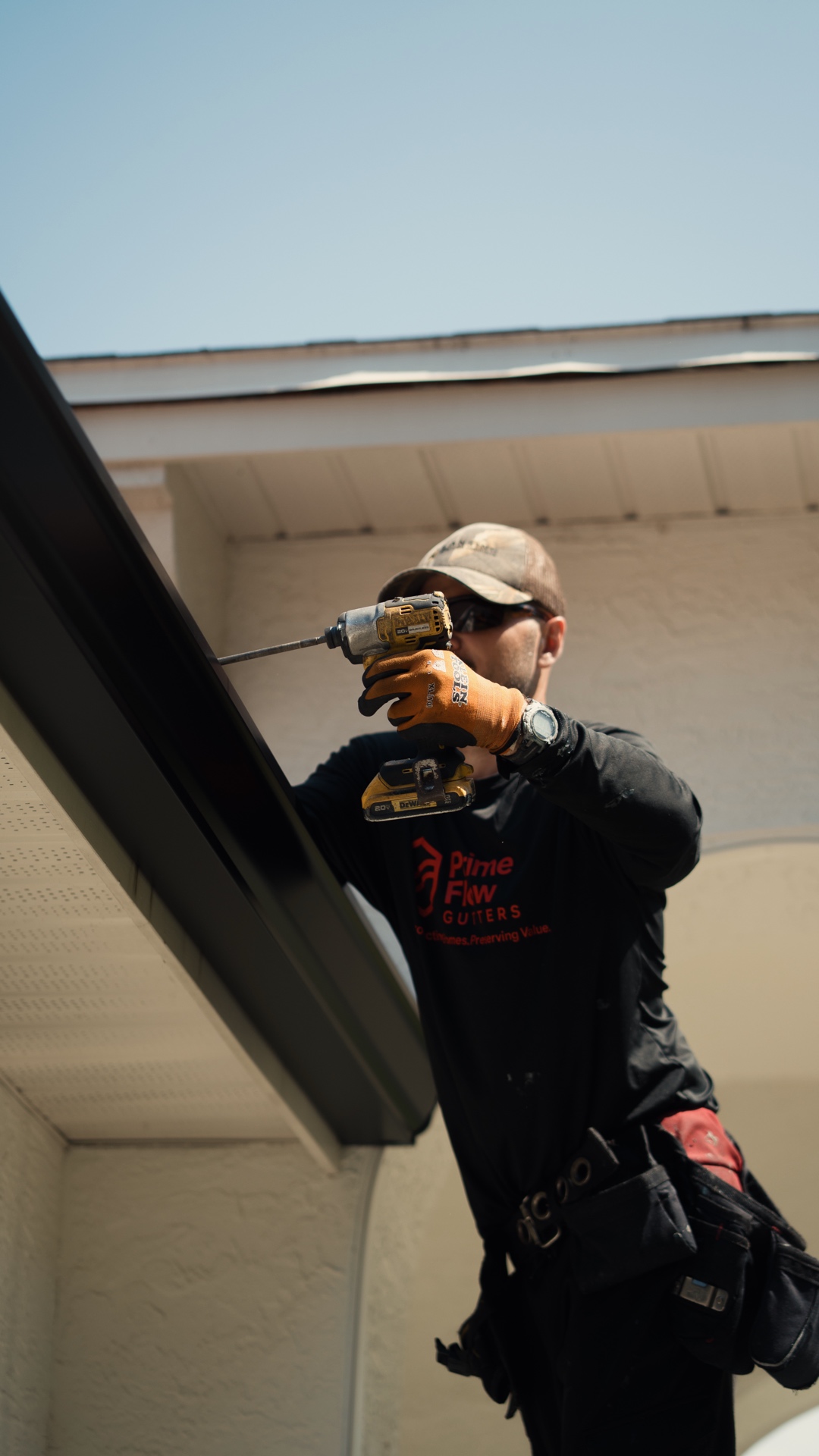
Hidden hangers, fasteners, fascia condition, spacing, roof-edge geometry, access, and the weight carried by the system all affect installation planning. PrimeFlow's preferred standard includes premium .032-gauge aluminum and hidden hangers placed approximately every 16 inches for applicable premium installations, subject to the property and written scope. A close, safe visual review helps distinguish a limited loose component from a broader attachment or fascia condition.
Use documentation to compare repair with replacement.
Photos, the observed rain pattern, previous repair locations, age and material when known, and a detailed written scope can clarify the decision. A repair may be appropriate for a limited correctable condition. Replacement may warrant evaluation when layout, capacity, material condition, or repeated failure patterns affect the broader route. The recommendation should explain why the proposed work addresses the observed condition without promising every future storm outcome.