
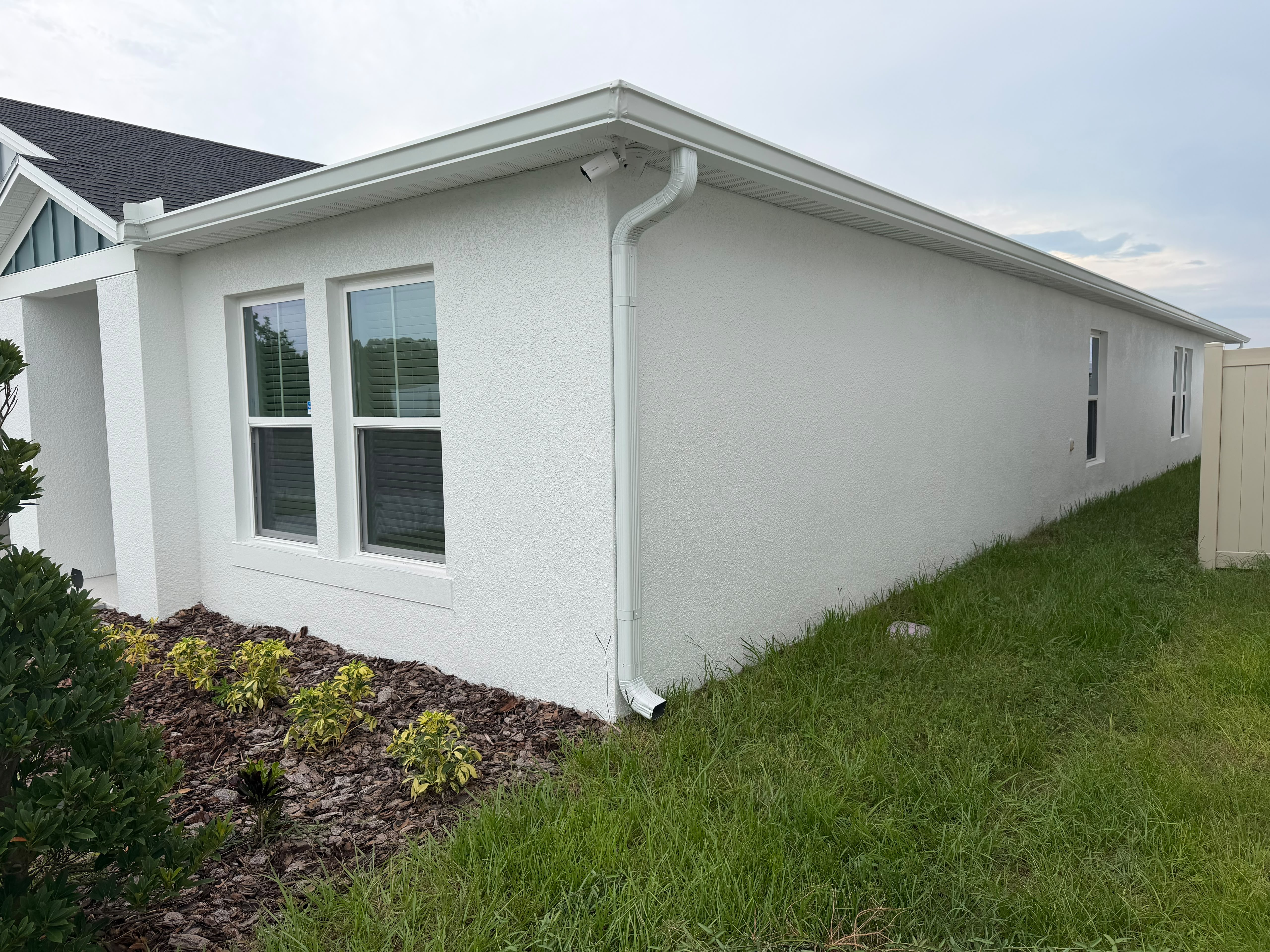
Before leaving, document the roof-water route.
A few dated exterior photos can make it easier to notice a changed roof edge, loose-looking downspout, debris accumulation, or a new splash pattern when you return. Photograph visible gutters, outlets, downspouts, discharge areas, and any roof edge that has been a concern. Do not climb onto the roof or attempt to correct a high or unsafe condition yourself.
Check what can be seen from the ground.
From a safe ground-level position, homeowners can note visible debris, sagging, open-looking seams, missing-looking components, peeling finish near the fascia, or discharge directed toward an entry, walkway, or planting area. A visual observation is not a diagnosis. Roof geometry, outlet capacity, hidden fastening, fascia condition, and the downspout route need property-specific review.
Return-home checks should start after conditions are safe.
Florida emergency guidance emphasizes personal safety and following local direction around severe weather. Once it is safe to inspect from the ground, compare current photos with the earlier record and note any visible change. A gutter system helps manage roof runoff; it does not guarantee prevention of storm damage, storm surge, neighborhood flooding, or every drainage condition.
Use the checklist to request a clearer scope.
If a concern appears, share the photos, property address, visible roof edge, existing gutter condition, and any access or HOA information with the appropriate PrimeFlow market team. The written scope can then address the actual collection path, downspout plan, visible fastening conditions, discharge direction, and exclusions instead of treating seasonal maintenance as a one-size answer.