
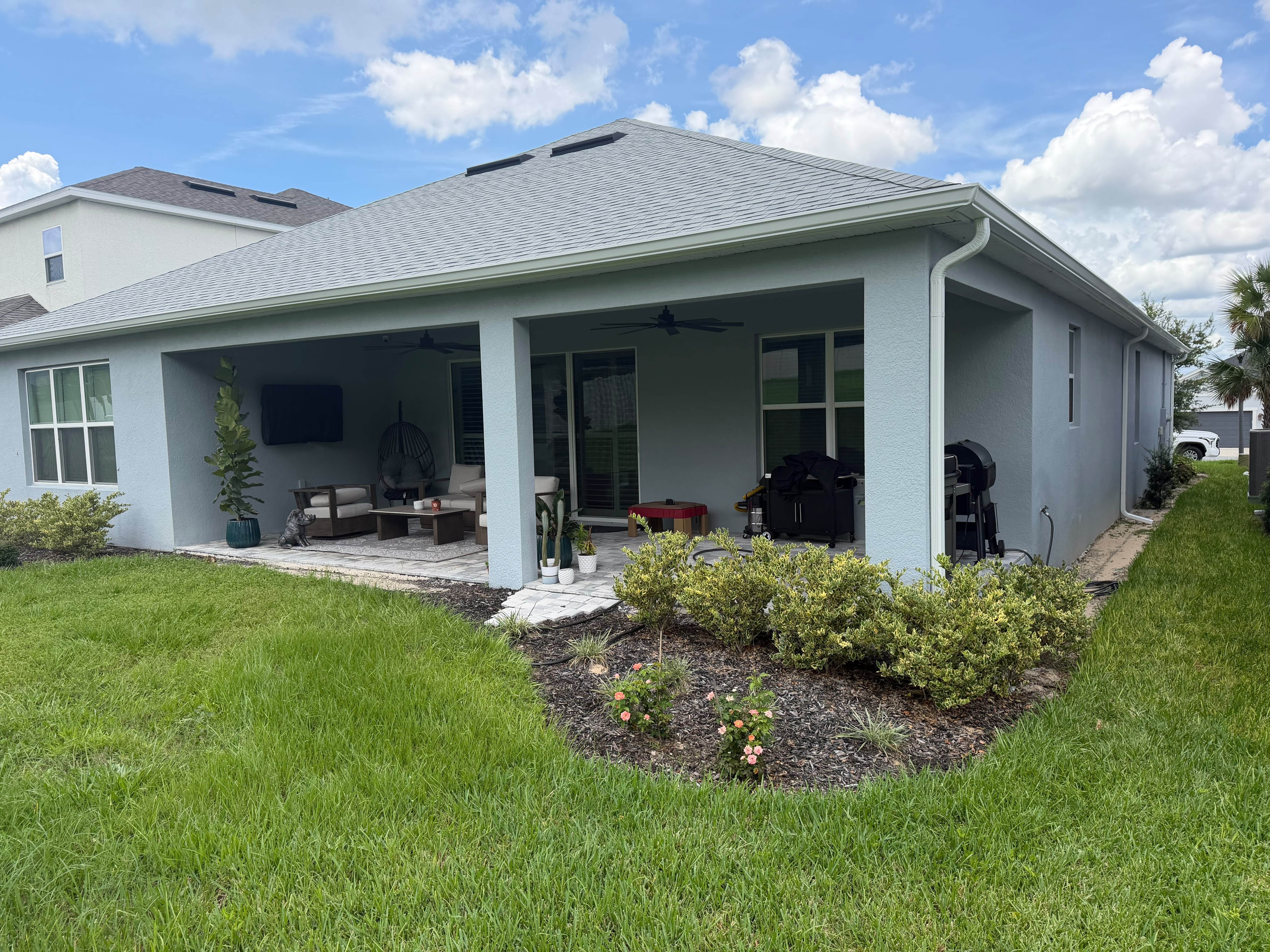
Start with the water that comes off the roof.
A gutter scope begins with roof edges, planes, valleys, outlets, downspouts, and where collected roof runoff lands. EPA and local stormwater resources describe how downspout choices can redirect roof runoff and reduce concentration at a particular location. That is different from diagnosing soil movement, a slab crack, groundwater, or a public drainage condition.
Ask where the concentrated water is actually landing.
A homeowner can document whether roof runoff repeatedly lands beside a wall, near an entry, across a walkway, into planting beds, or in a low area. The appropriate discharge path depends on site elevation, impervious surfaces, landscaping, access, boundaries, existing drainage, and applicable local requirements. A universal extension length or one product is not the answer for every property.
Separate roof-water work from broader property conditions.
A designed gutter and downspout route can help collect and direct water that comes from a particular roofline. It cannot guarantee correction of all yard drainage, settlement, structural, groundwater, municipal, or neighborhood flooding conditions. Those concerns may require an appropriately qualified evaluator outside a gutter installation scope.
Compare the written scope against the roof-water question.
A useful gutter proposal identifies the roof edges being addressed, gutter size, outlets, downspout quantity and route, discharge direction, access conditions, visible fascia observations, and exclusions. This makes it easier to understand what roof runoff the proposed system is designed to manage—and what remains outside that scope.