
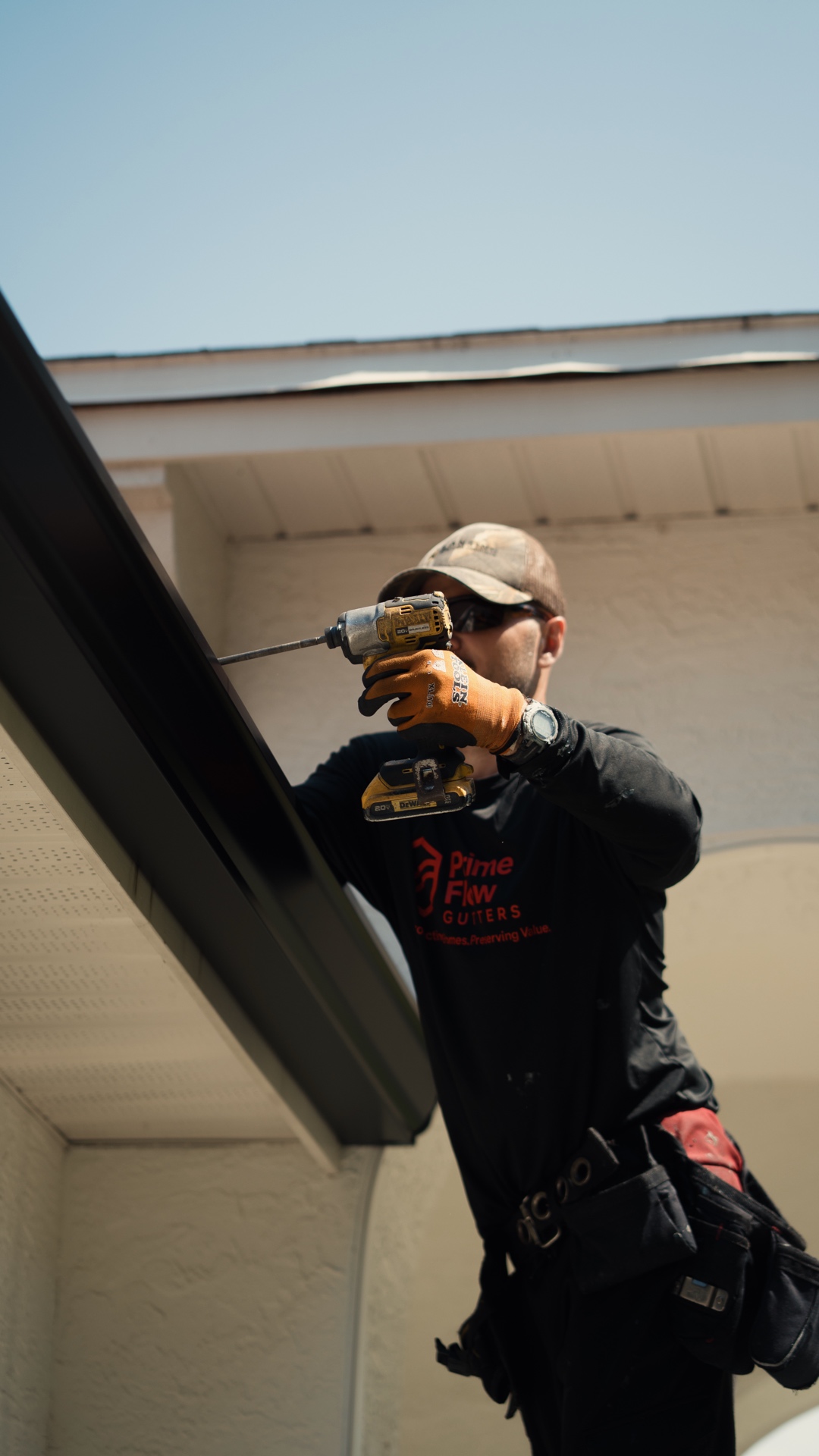
Complete visible review before severe weather approaches.
From a safe ground-level location, look for obvious debris, disconnected downspouts, loose-looking sections, displaced extensions, or blocked discharge areas. Schedule maintenance early enough that no one is working from a ladder or roof during lightning, high wind, active rain, or an approaching storm. Gutter guards can reduce debris entry for the right system, but they do not eliminate inspection or maintenance.
After the storm, document before permanent repair.
Florida's Homeowner Claims Bill of Rights advises policyholders to take photographs or video of damage before and after necessary repairs, keep receipts, and retain damaged property when feasible. Only document conditions when the area is safe. Avoid damaged electrical components, unstable structures, standing water with unknown hazards, and roof or ladder access. PrimeFlow Gutters can document exterior gutter scope; it does not assess structural safety or interior damage.
Contact the insurer before signing extensive repair contracts.
The Florida statute advises homeowners to file claims directly with their insurer and contact the insurer before entering a repair contract so managed-repair provisions or preferred-vendor requirements can be understood. Policy terms, coverage, deductibles, deadlines, and claim decisions belong with the insurer or qualified professional. Emergency actions should follow the policy and applicable safety guidance; keep receipts and records for any temporary work.
Verify the contractor and written scope.
The Homeowner Claims Bill of Rights advises confirming that a contractor is licensed to do business in Florida, requesting references, and requiring proof of insurance before repairs. A gutter scope should identify the affected runs, material, profile, outlets, downspouts, attachment approach, removal, discharge direction, visible conditions, warranty terms, and exclusions. It should not promise flood prevention, insurance coverage, or correction of damage outside the stated work.