
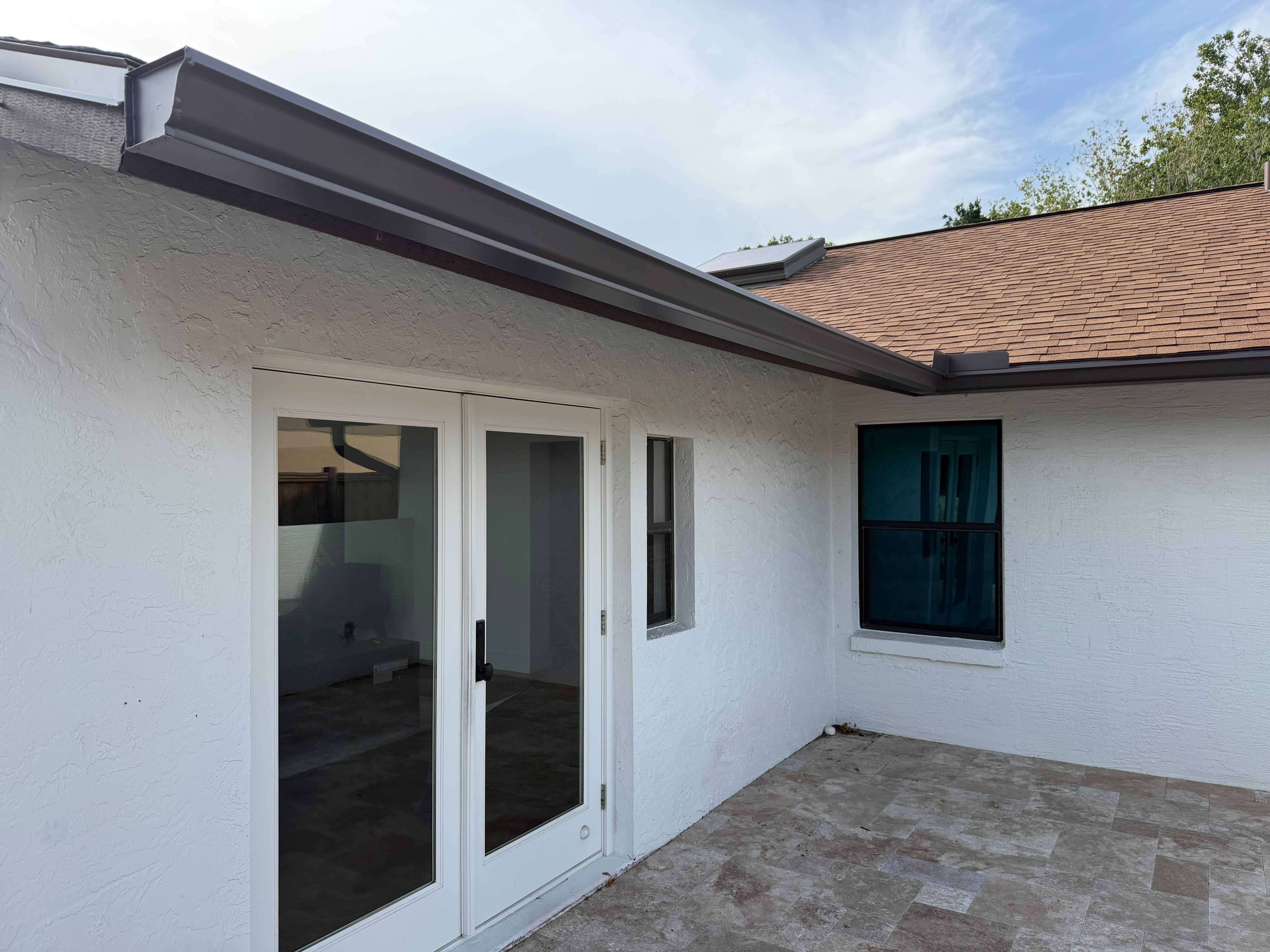
Document visible roof-edge details at ground level.
Buyers and sellers can take clear, dated photos of visible gutters, downspouts, corners, outlets, staining, open-looking seams, areas of splash, and the space where water discharges. The record supports a more specific conversation about a roof-water route. It is not a substitute for a home inspection, engineering review, property disclosure, or diagnosis.
Ask the right scope questions.
If a gutter project is being considered, ask what roof edge is included, which profile and material are proposed, where outlets/downspouts will go, how visible fascia conditions affect attachment, what removal is included, and where roof runoff is planned to exit. A written answer is more useful than an assurance based only on age or appearance.
Keep the purpose of the assessment narrow.
PrimeFlow can assess gutter and downspout conditions relevant to a proposed scope. A gutter assessment cannot determine every roof, foundation, moisture, insurance, appraisal, disclosure, or property-value issue. When another type of inspection or professional review is needed, the homeowner should obtain it separately.
Use the final scope as the project record.
For work that moves forward, retain the final written agreement, approved materials/color, warranty terms, exclusions, before/after documentation where available, and completion communication. This keeps the work itself clear without representing an unsupported outcome about a home sale or property condition.